Continuous Online Analysis for Complete Cement Process Control
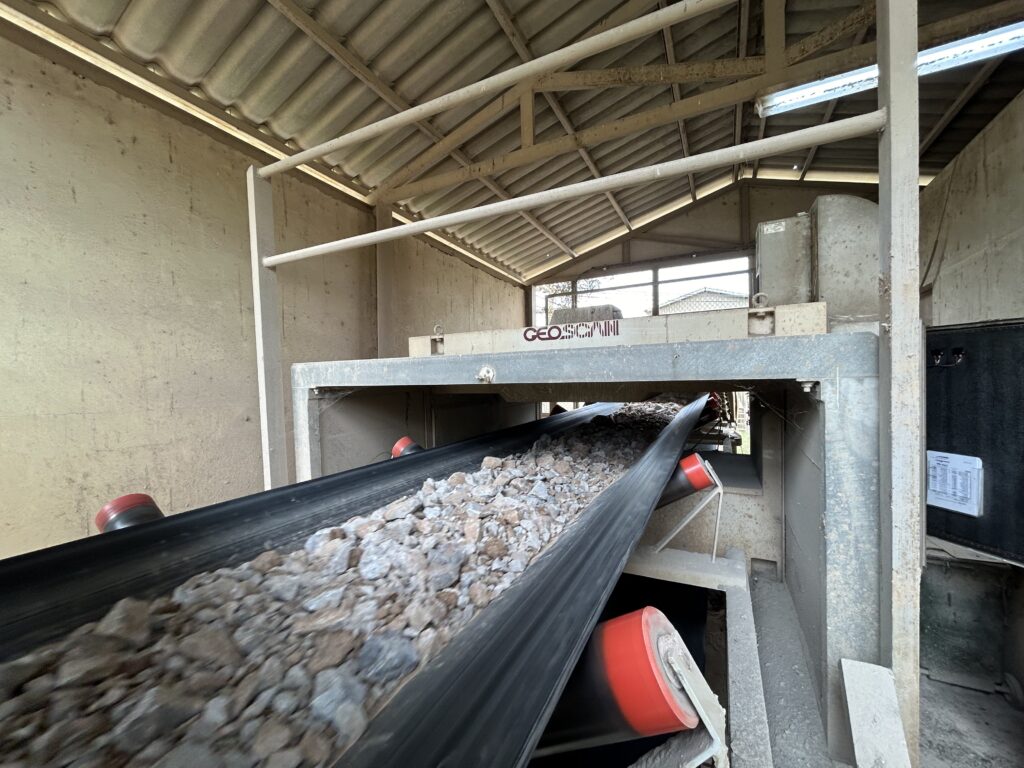
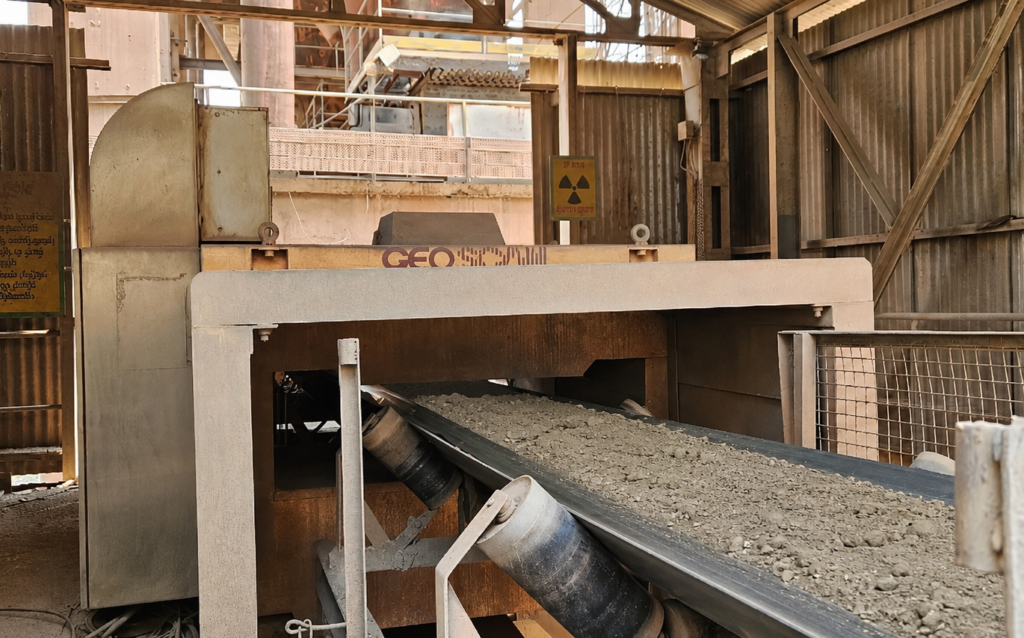
Maintain consistent product quality from quarry to finished cement with continuous online analysis of raw materials, raw mix and fuels. Most global cement producers understand the proven benefits of online analysis and GEOSCAN-C has become a trusted analyser in cement plant quality measurement applications. Scantech is the only analyser vendor on the market to guarantee average stockpile quality if measured using a GEOSCAN-C analyser.
Every stage of the cement manufacturing process depends on consistent material quality. Variations in quarry chemistry, raw mix composition and fuel quality can reduce kiln stability, increase operating costs and impact final product quality.
Scantech’s continuous online analysis solutions help cement producers minimise this variability by providing accurate process information throughout production. Operators can optimise raw mix control, improve fuel management and maintain more stable kiln operation using continuous measurements across the production process.
The result is greater operational stability, reduced production variability and more consistent cement quality, helping producers improve efficiency, lower costs and maximise plant performance.
The quality of a cement plant’s raw mix begins with the stockpile. Natural variations in limestone, clay and corrective materials can create significant changes in chemistry if materials are not blended effectively. Inconsistent stockpiles increase the need for composition corrections through additives for raw mill feed and make it more difficult to maintain stable kiln feed chemistry.
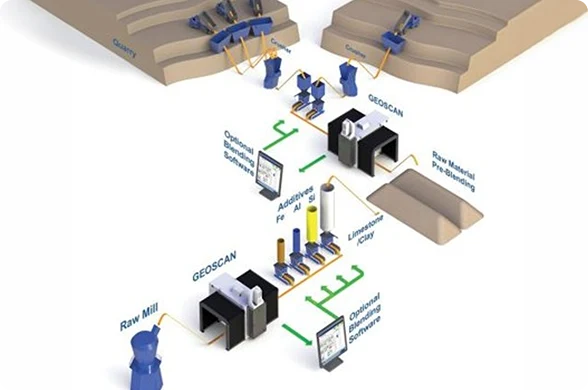
Scantech’s continuous online analysis solutions provide continuous measurements of raw material chemistry during limestone, clay and additive stockpile building, allowing operators to monitor material quality and make informed stacking decisions. Whether constructing circular, longitudinal, chevron or windrow stockpiles, operators gain greater visibility of material chemistry to produce a more homogeneous stockpile and deliver a more consistent feed to downstream processes.
Using GEOSCAN-C combined with BLENDSCAN, Scantech can automatically optimise stockpile building by directing material placement based on measured chemistry, helping achieve target quality while maximising the use of available raw materials.
Key Benefits
Improve stockpile consistency
Reduce raw material variability
Optimise limestone and additive blending
Deliver a more stable raw mill feed
Reduce corrective material usage and costs
Improve kiln feed consistency
Raw Mix Control
Maintaining a consistent raw mix is essential for stable kiln operation and high quality clinker production. Variations in limestone, clay and corrective material proportions can affect kiln performance, increase fuel consumption and reduce product consistency.
Scantech’s continuous online analysis solutions continuously monitor raw materials, raw meal, kiln feed, and corrective material additions, providing operators with accurate chemical composition throughout the production process. Continuous measurements allow raw material and additive proportions to be adjusted quickly, helping maintain target raw meal chemistry, improve kiln stability and reduce process variability. Additive control using online analysis (e.g. GEOSCAN-C) and control software (e.g. BLENDSCAN) has proven to reduce LSF variability by 50% compared to control relying on sampling and laboratory (XRF) assay and manual additive adjustments.
Key Benefits
Improve kiln stability
Maintain target LSF, SM and AM
Reduce chemistry variation
Improve clinker consistency
Lower fuel consumption
Reduce corrective material usage
Fuel Quality Monitoring
Fuel quality has a direct impact on kiln efficiency, thermal stability and production costs. Variations in moisture, ash and chemical composition can reduce combustion efficiency and create unnecessary process variability.
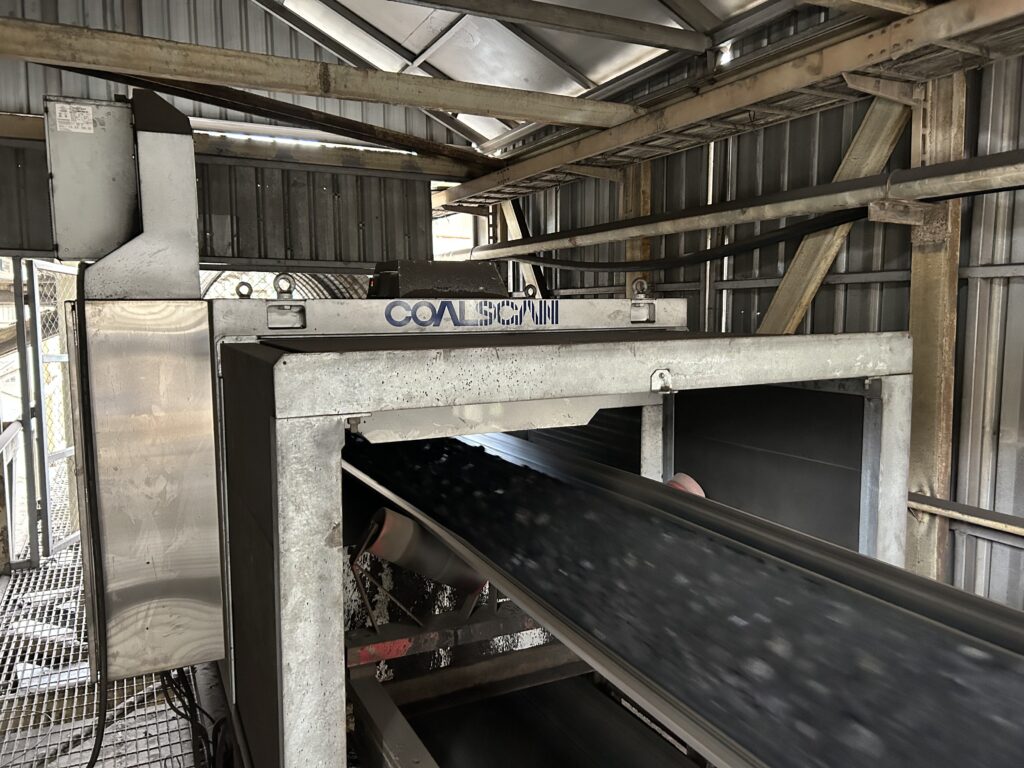
Scantech’s continuous online analysis solutions continuously monitor coal before it enters the kiln. By providing continuous measurements of fuel quality, operators can optimise fuel blending, improve combustion efficiency and maintain stable kiln operation while reducing operating costs.
Key Benefits
Improve combustion efficiency
Reduce fuel variability
Improve kiln stability
Lower fuel costs
Optimise fuel blending
Improve energy efficiency
Alternative Fuel Monitoring
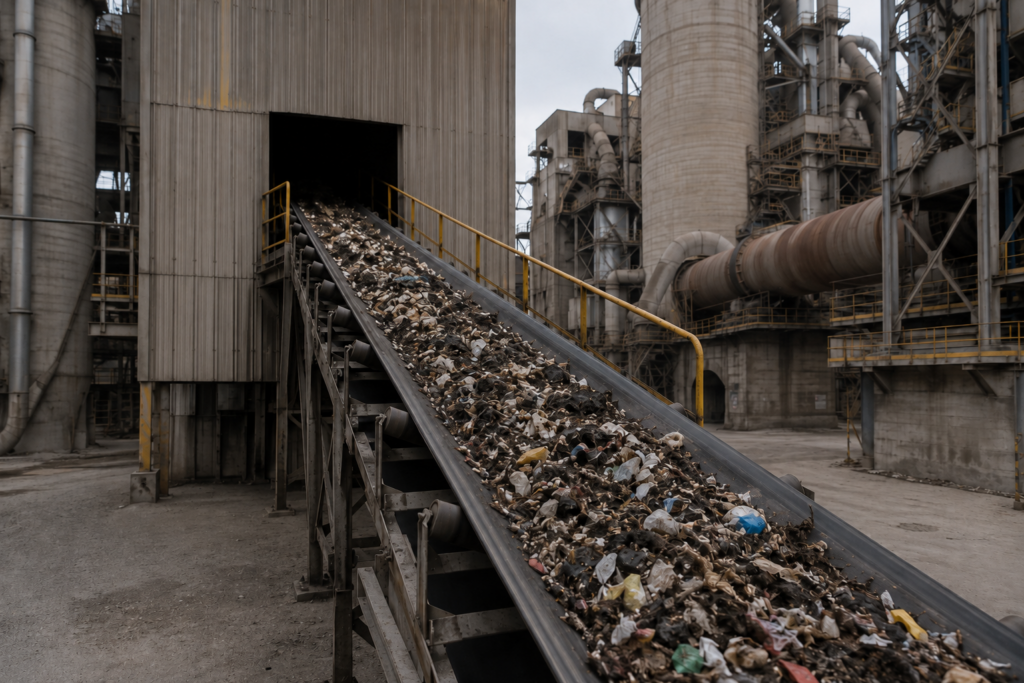
As cement producers increase the use of alternative fuels to reduce costs and emissions, maintaining consistent fuel quality becomes increasingly important. Variations in moisture, ash and chemical composition can affect combustion performance, kiln stability and product quality.
Scantech’s continuous online analysis solutions continuously monitor alternative fuels before they enter the kiln. Continuous measurements help operators optimise fuel blending, increase substitution rates and maintain stable kiln operation while supporting sustainability objectives.
Key Benefits
Increase alternative fuel substitution
Improve combustion stability
Reduce fuel costs
Improve emissions consistency
Optimise fuel blending
Support sustainability initiatives
Why Continuous Online Analysis?
Laboratory testing remains an essential part of quality assurance, providing highly accurate analysis of sampled materials. However, laboratory results are typically based on periodic samples and are only available after the material has already moved through the process.
Continuous online analysis complements laboratory testing by continuously monitoring the entire material stream as it is conveyed. This provides operators with immediate process information, enabling earlier identification of material changes, faster process adjustments and improved control over product quality and plant performance.
Limitations of Traditional Laboratory Testing
Periodic sample analysis
Results available after sampling and analysis too late for process control
Represents only a small portion of the material stream
Best suited for quality verification of product where heterogeneity is lower
Benefits of Continuous Online Analysis
Continuous measurement through the entire conveyed material stream
Each cement plant has unique material behaviour, control systems and layout constraints.
Scantech systems are configured to align with plant infrastructure, calibration requirements and process objectives. Measurement frequency, analyser specification and integration parameters are tailored to suit operational conditions.
This approach ensures reliable data delivery without unnecessary system complexity.
Cement FAQs
Where are analysers typically installed in cement plants?
Install locations depend on the process objective, including stockpile building, raw mix proportioning or fuel handling. Generally, the earlier the measurement occurs in a process the greater the potential downstream savings.
How does Scantech support raw mix stability?
Online elemental measurement combined with blending control helps reduce variability before kiln entry. Ideally the limestone quality will have been homogenised in stockpiling and reclamation to minimise the need for additives to the raw meal.
Can alternative fuels be monitored continuously?
Yes. On-conveyor systems monitor elemental composition, ash parameters and moisture as fuel moves through the plant.
Are moisture systems adaptable to different plant layouts?
Yes. Belt, bin and bale monitoring options are available depending on material flow configuration.
How are systems configured for different cement operations?
Each system is tailored to plant layout, material characteristics and process control requirements. This includes the analyser as well as possible software solutions.