Continuous Online Analysis for Mineral Processing Operations
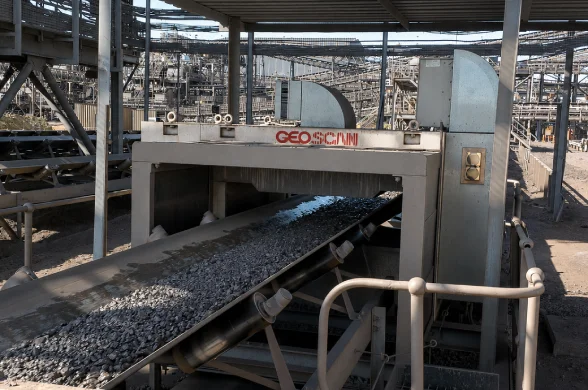
GEOSCAN-M is the leading high performance, PGNAA-based elemental analyser in the global minerals sector with over 140 systems installed in over a dozen commodities since 2003. Through representative, full flow analysis GEOSCAN-M helps mineral producers reduce process variability, improve product consistency and optimise production through continuous process monitoring.
Mineral processing operations depend on consistent knowledge of ore grade, composition and moisture. Variability can reduce recovery, increase costs and affect final product quality.
Scantech’s continuous online analysis solutions provide accurate, representative measurements throughout mining and processing operations, helping optimise blending, improve feed consistency and monitor moisture. GEOSCAN-M and GEOSCAN-Y support full-flow conveyed and slurry applications, delivering timely process data across a wide range of mineral flows.
Ongoing advances in analyser design, calibration and measurement technology enable precise detection of low elemental concentrations, improved reliability and flexible system configuration. These capabilities support greater plant stability, improved recovery, operational efficiency and faster returns on investment.
Understanding ore quality before it enters the processing plant is critical for maximising recovery and maintaining consistent plant performance. Variations in ore grade can affect throughput, recovery and concentrate quality.
Scantech’s continuous online analysis solutions continuously monitor run of mine (ROM) ore, primary crusher discharge, transfer conveyors and mill feed, providing operators with accurate elemental analysis throughout the production process. Continuous measurements support improved ore routing, grade control and production planning.
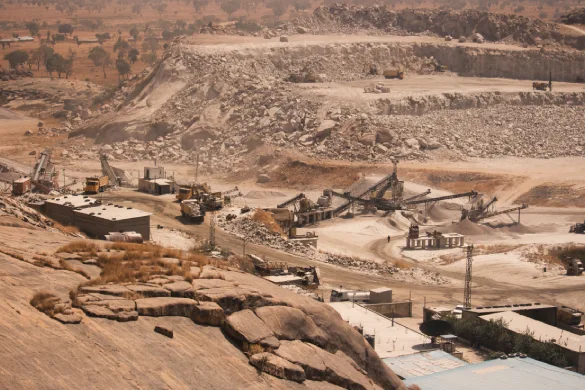
GEOSCAN-M has become an effective tool in automating ore grade control. The representative multi-elemental measurement combined with ReadiMoist TBM moisture and SizeScan PSD measurement data can be utilised to characterise ore and waste material to improve plant feed quality and process performance. Analysers can be applied to IPCC (in-pit crushing and conveying) operations to monitor ore quality before it leaves the mine to post-primary crushing and pre-COS (crushed ore stockpile) applications. GEOSCAN-M can be used to control ore quality from ROM (run of mine) stockpiles feeding the crusher using feedback from quality measurements after crushing.
Key Benefits
Improve feed consistency
Optimise ore blending
Reduce process variability
Improve plant performance
Maximise stockpile and resource utilisation
Increase operational confidence
Bulk Diversion
Efficient bulk material diversion, or Bulk Ore Sorting (BOS), ensures ore is directed to the most suitable destination, improving resource utilisation and plant performance. GEOSCAN-M provides continuous ore quality information that enables material to be diverted based on grade and composition.
In IPCC and post-primary crusher applications, analysers can separate ore from waste, classify different ore qualities and apply cut-off grades for routing decisions. Waste removal can range from 1% to more than 20% of feed tonnes, increasing average ore grade and freeing plant capacity for higher-value material. Sub-economic ore can also be redirected to low-grade stockpiles or alternative processing routes.
GEOSCAN-M has been applied to bulk diversion in copper, nickel, platinum and iron ore operations. Scantech has more than 40 years of experience applying sensor technologies for bulk material diversion, with continuous measurements supporting informed routing to processing, blending, stockpiles or waste.
There are many published papers and articles covering Scantech analysers in bulk ore sorting applications available (a few: Nadolski et al 2016, AngloAmerican 2019, Kurth and Balzan 2020, etc)
Key Benefits
Improve ore routing decisions
Maximise resource utilisation by minimising ore losses and maximising waste rejection
Reduce unnecessary processing of waste or product-quality material
Optimise plant feed quality
Increase operational flexibility
Improve production efficiency
Stockpile Management & Ore Blending
Variability in ore chemistry can significantly impact downstream processing performance. Effective stockpile management and ore blending help maintain a consistent feed to the processing plant and improve overall recovery by as much as 10%. A 1% increase in recovery is typically considered very significant with a typical payback in several months.
Scantech’s continuous online analysis solutions continuously monitor ROM stockpiles, low-grade stockpiles, high-grade stockpiles and blended ore streams, providing operators with accurate information to optimise stockpile building, reclaiming and blending strategies. Improved blending reduces feed variability, increases recovery and delivers a more consistent ore feed to downstream processes.
The basis for blending decisions could be grade, deleterious content, mineralogy associated with ore type, contaminant levels, process characteristics such as ore hardness, clay content, fragmentation, moisture content, etc. Scantech analysers can be used to directly measure or derive many relevant material characteristics to improve control of plant feed quality or product quality.
A copper leaching operation in Asia utilised a GEOSCAN-M to control ore blend from ROM (run of mine) stockpiles, pyrite additive based on feed chemistry requirements and leach circuit copper capacity. The acid consuming gangue content and moisture analysis were used to control acid dosing to maintain target pH. There are two published papers available from that site on that application (Arena and McTiernan, 2011 and Balzan et al, 2016).
Key Benefits
Improve ore grade control
Optimise mill feed
Reduce ore dilution
Increase plant throughput
Improve production planning
Maximise resource utilisation
Mill Feed Optimisation and Feed Forward Control
Scantech’s continuous online analysis solutions continuously monitor run of mine (ROM) ore, primary crusher discharge, transfer conveyors and mill feed, providing operators with accurate elemental analysis throughout the production process. Continuous measurements support improved ore routing, grade control and production planning.
GEOSCAN-M has become an effective tool in automating ore grade control. The representative multi-elemental measurement combined with ReadiMoist TBM moisture and SizeScan PSD measurement data can be utilised to characterise ore and waste material to improve plant feed quality and process performance. Analysers can be applied to IPCC (in-pit crushing and conveying) operations to monitor ore quality before it leaves the mine to post-primary crushing and pre-COS (crushed ore stockpile) applications. GEOSCAN-M can be used to control ore quality from ROM (run of mine) stockpiles feeding the crusher using feedback from quality measurements after crushing.
Key Benefits
Improve ore grade control
Optimise mill feed
Reduce ore dilution
Increase plant throughput
Improve production planning
Maximise resource utilisation
Moisture Management
Moisture influences material handling, blending, stockpile management and metallurgical accounting. Accurate moisture information is essential for efficient processing and reliable production reporting. Moisture measurement assists with dust management and dewatering operations such as filtering and drying and may be important for product transport through TML (transportable moisture limit) control. Scantech’ range of ReadiMoist TBM and CM200 moisture analysers suit most moisture measurement requirements.
Scantech’s continuous online analysis solutions continuously monitor run of mine (ROM) ore, concentrates, stockpiles and transfer conveyors, providing accurate moisture information throughout the operation. Continuous moisture measurement supports blending accuracy, improves process control and enhances operational efficiency.
A gold mining company in the USA employed a ReadiMoist TBM for feed moisture measurement for dry tonnage determination to ensure compliance with a statutory dry tonnage processing limit. The over-generous moisture factor previously applied limited their throughput. The moisture analyser in conjunction with some other changes resulted in a 3% increase in feed rate and still comply with their limit. The increase in gold value in ore feeding the process was well over USD 50M per year. A published presentation is available on this (Bozbay and Moyo, 2019).
Key Benefits
Improve moisture control
Optimise blending
Improve material handling
Support metallurgical accounting
Increase operational efficiency
Improve production reporting
Why Continuous Online Analysis?
Laboratory testing remains an essential part of quality assurance, providing highly accurate analysis of sampled materials. However, laboratory results are typically based on periodic samples and are only available after the material has already moved through the process.
Continuous online analysis complements laboratory testing by continuously monitoring the entire material stream as it is conveyed. This provides operators with immediate process information, enabling earlier identification of material changes, faster process adjustments and improved control over product quality and plant performance.
Limitations of Traditional Laboratory Testing
Periodic sample analysis
Results available after sampling
Represents only a small portion of the material stream (typically only the composition of the actual sample)
Best suited for quality verification or for trace elements that online analysis may not be able to measure directly at low concentrations
Benefits of Continuous Online Analysis
Continuous measurement across the entire material stream
Every mineral processing site has unique material behaviour and control requirements.
Scantech customises analyser configuration, measurement frequency and precision to suit site conditions, ensuring seamless integration and optimal performance from each mineral processing analyser.
Commodity-Specific Solutions
Scantech provides tailored solutions for key mineral commodities.
Gold
High-specification elemental analysis supporting grade control, blending and recovery optimisation.
A mineral processing analyser is an on-conveyor system that continuously measures material composition. It provides real-time data to support process optimisation, blending and quality control.
How does an ore grade monitoring system improve efficiency?
An ore grade monitoring system enables continuous measurement of elemental composition, helping operators stabilise feed quality, improve recovery and optimise plant performance. Feed variability can directly affect metal recoveries by up to 10%.
What is real time elemental analysis in mining?
Real time elemental analysis in mining involves measuring the chemical composition of conveyed ore instantly, allowing faster and more informed operational decisions. These may relate to ore blending or diversion strategies that can optimise ore quality before processing.
Where are conveyor belt analysers installed in minerals operations?
Conveyor belt analysers are typically installed on conveyors between the mine, stockpile, concentrator and processing plant to provide continuous, representative measurement. In bulk commodities like iron ore, bauxite, manganese and chromium analysers are also often installed on product conveyors to help manager product quality.
Can Scantech systems be customised for specific materials and sites?
Yes. Each analyser is configured to suit material characteristics, conveyor configurations and plant control systems to ensure accurate and reliable performance. Customised calibrations are developed for each analyser implementation.